Lessons from Patti Lupone
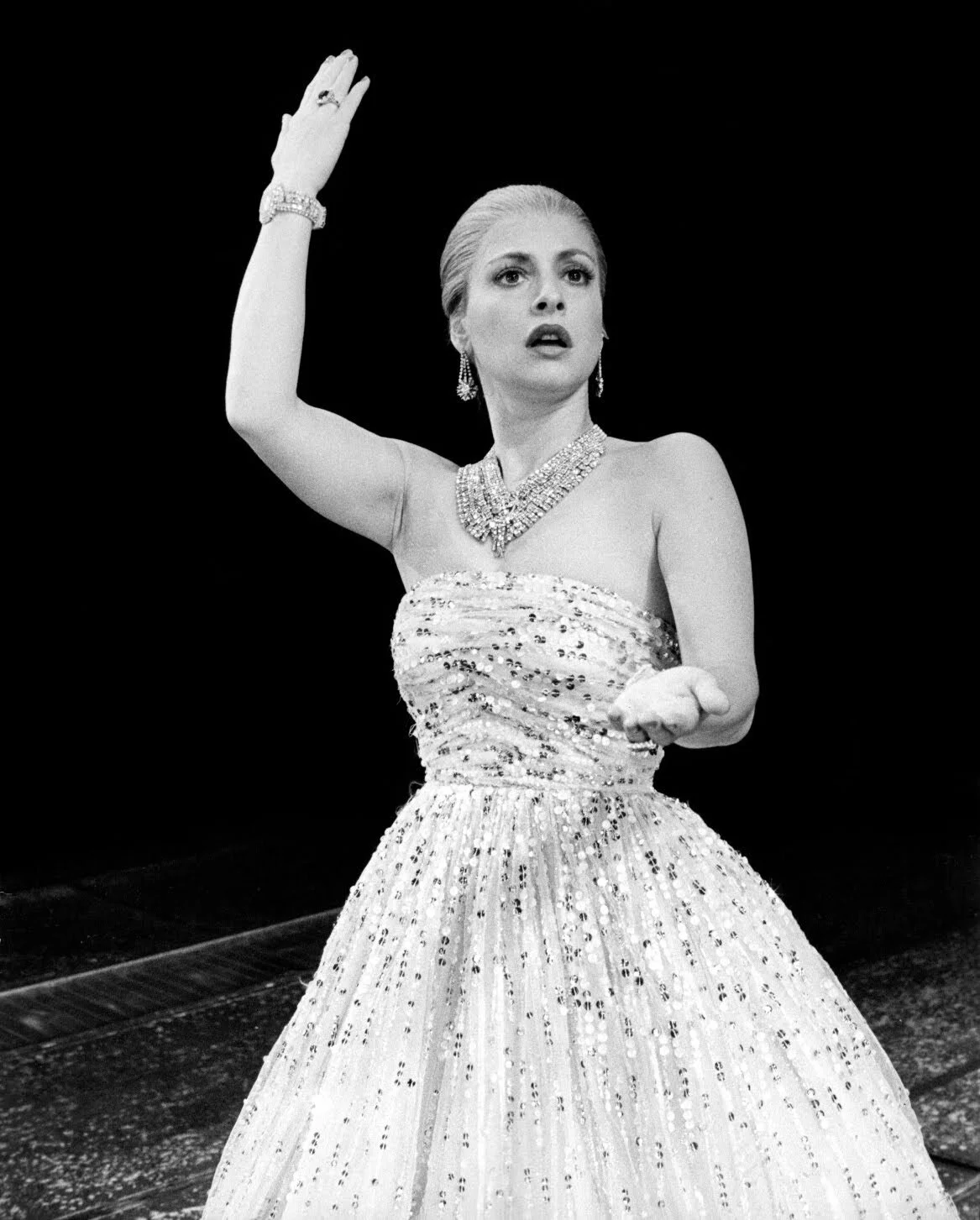
My Broadway Diva idol is the great Patti Lupone. She came to Utah for a performance last year in September and I had no idea. I still consider not seeing her when I could have as one of my greatest regrets that I didn’t know about. Regardless, I adore her and am reading her memoir, Patti Lupone: A Memoir and it’s teaching me a great deal about acting. So, for your reading pleasure, here’s everything I’m learning from Patti Lupone:
The craft of acting, the process of learning how to act, is such an investigation of one’s soul and being. However painful it was, I wouldn’t change a minute of the experience, because it prepared me for everything in this business, including the worst experiences of my career and my life would survive. The blows took their toll, no question. But I came out a much stronger person and a much stronger actor. (pg 50)
Acting has to be joyful. It can’t thrive in an overwrought state. The audience absolutely knows when an actor is uncomfortable, and they can’t be taken on the journey of the story if the actor is internalized - meaning too much in their head. And truly, the actor’s only responsibility is the telling of the story. We have to enter the stage confident and with a certain command in order to relax an audience and gain their trust to follow us. (pg 59)
Learn to leave the character and the play onstage. (pg 59)
Never underestimate your audience. (pg 66)
Despite a Tony nomination for my role in The Robber Bridegroom, Mr. Houseman asked me to audition for its second Broadway run. I refused. There’s no way I’m auditioning for a role I was just nominated for, I thought. Moreover, Kevin (Kline) and I were the only cast members from The Acting Company who were even asked to audition. Everyone else was shut out. I couldn’t believe that our company wasn’t going back to Broadway. However, Kevin swallowed his pride and actually consented to read. Another lesson I learned was that when you swallow your pride, you often choke on it. Kevin didn’t get the part. (pg 73)
David Mamet’s directives, such as “Let the script do the work, you have the fun” taught me to focus on the text. “Dare to live in the area where you do not know what is going on” taught me to trust the concept of letting go of control. (pg 96)
Musicals don’t have the fourth wall when the character is singing. (pg 98)
Take the audience’s point of view into consideration. Who knows the audience better than the actor who is playing to them - the storyteller telling the story from the foot of the stage back out to the house? Producers and directors lose perspective on a play after multiple viewings. They have a tendency to forget that the audience will only see it once. As a result, the creators often second-guess themselves and their audience. They stop trusting their initial instincts. (Pg 99)
David (Mamet) taught me that when you “act” upon the words in any play, you make more work for yourself and ultimately defeat the playwright. Under David’s tutelage, I also learned why I had a tendency to rush through the performance - I was not trusting the playwright. I learned that I didn’t write the words and my sole responsibility was to deliver the playwright’s words without comment, without acting upon them, which is hard to do if you don’t trust yourself to begin with. Working with David reinforced what I learned at Juilliard but had failed to fully realize: Remain open. David’s lessons were a tremendous help to me, especially the one about “letting the script do the work” - just speak. That, for me, was a real breakthrough. The easier I played it, the more I comprehended the material. I think it was the ability to trust - my mind, my choices, and truly, my being on stage, to begin with. I also learned to trust the script’s silences and pauses. For me, they are as intense and as much fun, if not more so, than a Mamet word volley. It was the perfect illustration of “dare to live in the area where you do not know what is going on.” That is a hard lesson to grasp, but one that ultimately is the most liberating. (Pg 99-100)
In Evita, David Vosburgh, a member of the chorus, saved my job. He gave me so much more than just the ability to finally sing the role. He gave me inner strength, and the valuable lesson that nothing is impossible - that diligent work, patience and trust and the only things that will see you through to the very end of any journey. (Pg 117)
The wonderful thing about theatre is the lessons one learns, the life experiences that accrue. And because it’s such a subjective profession, the lessons, good or bad, are deep." (Pg 123)
What doesn’t kill you makes you stronger… or leaves you open to secondary infections. (Pg 133)
Even the actors who are considered “Broadway working actors” don’t just go from one Broadway play to another. Life in the theatre doesn’t work that way. After Evita, it would be years before I again set foot on a Broadway stage. If I’d turned down everything that came up in between, I would have starved. But more importantly, I would not have grown as an actor. I would’ve missed truly enriching personal and theatrical experiences. (Pg 147)
Jonathan Pryce taught me an incredibly valuable lesson: “Get to the end of the line.” Make your point is what he was saying. I had no idea that I wasn’t making my point. What I was doing was taking too much time within the line, and as a result, I was losing all sense of it by the time I got to the end. I was being indulgent onstage. Thank you, Jonathan. I quote him all the time. (Pg 157)
What is theatre if it doesn’t incite, doesn’t move, doesn’t change us in some way? (Pg 164)
Sometimes, one just gets sick and tired of the play. It’s actually when I start to do my best work. When I’m bored, I stop “acting.” (Pg 174)
Over the years, nobody’s fought my battles for me. This is my career, my livelihood, and my talent. I will protect it if nobody else does. (Pg 177)
The audience is half of a stage actor’s performance. They supply information an actor can’t possibly know until there’s that interaction. When that extraordinary rapport occurs between actor and audience, the fun begins. (Pg 188)
You have to play the play so the audience goes out remembering the performance. (Pg 246)
Sweeney Todd gave me memories and moments I’ve only had a few times in the theater. They are rare moments when you lose yourself and you transcend the reality of being onstage. The person playing opposite you has become real, not a character. It sounds so cliche, but there are moments where you’re so lost in the setting that you stop acting and you’re living. It’s a heightened reality, an amazing, almost out-of-body experience. It’s why I’m on stage. (Pg 279)
I think the problem with characters that become iconic, the way Rose from Gypsy has, is that the portrayals can become petrified. Ethel Merman remains an incredibly powerful presence long after her passing, and her Rose has always been the gold standard. The temptation is to get out the cookie cutter and try to make every Rose thereafter do exactly what she did. For an actor, however, that quickly becomes stifling. It does a disservice to the show because the performance seems rote - you may be in Rose’s clothes, but you’re not in her skin. Actors’ interpretations are highly subjective. You read the script, you’re guided by the playwright’s intentions, but then the development of the character is up to you. That’s why so many great characters are universal; as long as they are fulfilling the needs of the story, most can be played in different ways. That’s why we still love Shakespeare: his heroes and villains are truly timeless. Moreover, Shakespeare’s characters give actors lost of choices in how they portray them. (Pg 290)
Telling the story is my primary responsibility as an actor. I have to start at the beginning: what is the playwright saying? What is the journey? Why is my character there? Once I have all that information, then generally the lines start to make sense and the character becomes apparent and I’m free. It’s a sticky feeling to be on stage confused, not knowing what you’re playing. Gypsy is so well written, but it’s a very tricky play. With probing came the knowledge and with the knowledge came the freedom. (Pg 297)
Celebrated Broadway director Jack O’Brien said to The Acting Company ensemble when he was rehearsing The Time of Your Life, “Fly, I’ll catch you.” It refers to danger and taking risks on stage. That’s what Boyd, Laura and I were doing in Gypsy. I was flying, they were catching. They were flying, I was catching. The farther I had to reach for them, the more fun I had. Freedom and danger on stage - there’s nothing better. Why act otherwise? (Pg 299)
The release on a closing night is extraordinary. Every acting dilemma, every confusing plot point, every bad staging issue is resolved, and the liberation one has in a final performance informs a character more than eight times a week for ten months does. The irony. (Pg 310)
With Sunset Boulevard, the lesson was reinforced that whatever doesn’t kill you makes you stronger - but not until it almost kills you first. Almost. (Pg 315)
Whether you’re in the audience or on the stage, theater is eternally transportive and transformational, allowing the soul to breathe and the spirit to rejuvenate. (Pg 315)